What is Dynamic Neuromuscular Stabilization?
Dynamic Neuromuscular Stabilization (DNS) — it's an intimidating mouthful, but bear with me while I explain this exciting approach for the restoration of correct core stability. Its applications are wide — from prevention and rehabilitation of chronic pain to the optimization of athletic performance.
We Start Out With Perfect Stabilization Patterns
DNS is based on the fact that humans are genetically wired for correct muscle patterns for stability. During our first year of life, as the central nervous system matures, there is a gradual and automatic development of movement. The vast majority of us reach developmental milestones like sitting, crawling, and walking in the same way, at about the same age, and with perfect stabilization patterns.

But Then, "Stuff" Happens…
Ideally, these innate stabilization patterns should stay with us all our life, but for a variety of reasons — injuries, posture issues, incorrect training, stress, anxiety — they are disturbed. Consequently, compensation develops and the required muscle balance for correct stability is compromised. In adults, the first indication of dysfunctional movement patterns is often discomfort and pain.
Prolonged sitting
Stress and anxiety
Injury or pain
The DNS Strategy: Restore the Pattern
The DNS strategy aims to restore our innate movement patterns through specific manual treatment and training. An initial assessment identifies dysfunctional stabilization patterns. Some patients can correct the pattern themselves with just instructions, others might need manual treatments. DNS treatment and training rely heavily on basic neurophysiological principles of the movement system.
The Three Pillars of DNS
The framework that guides every assessment, treatment, and training session.
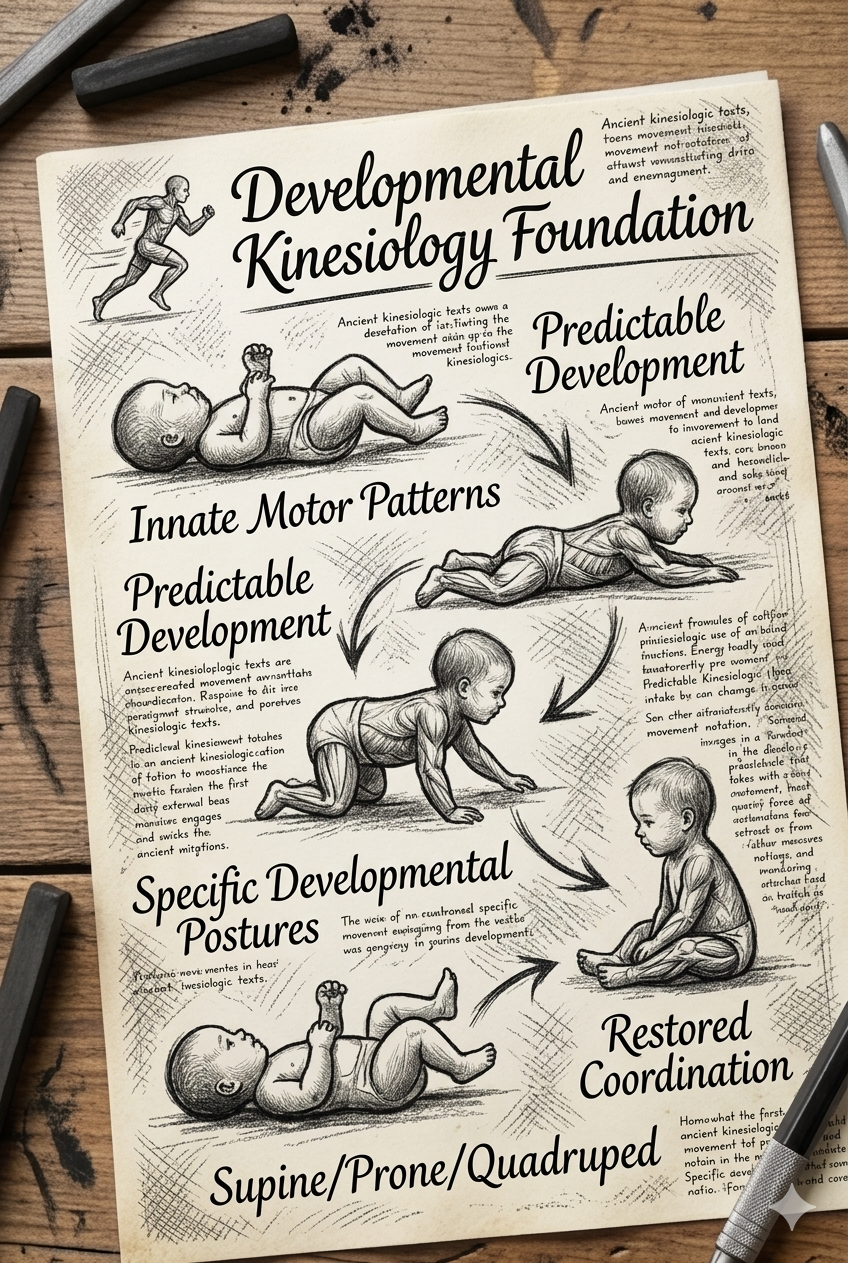
Developmental Kinesiology Foundation
DNS is grounded in the predictable movement patterns infants develop in their first year — the blueprint for ideal adult stability.
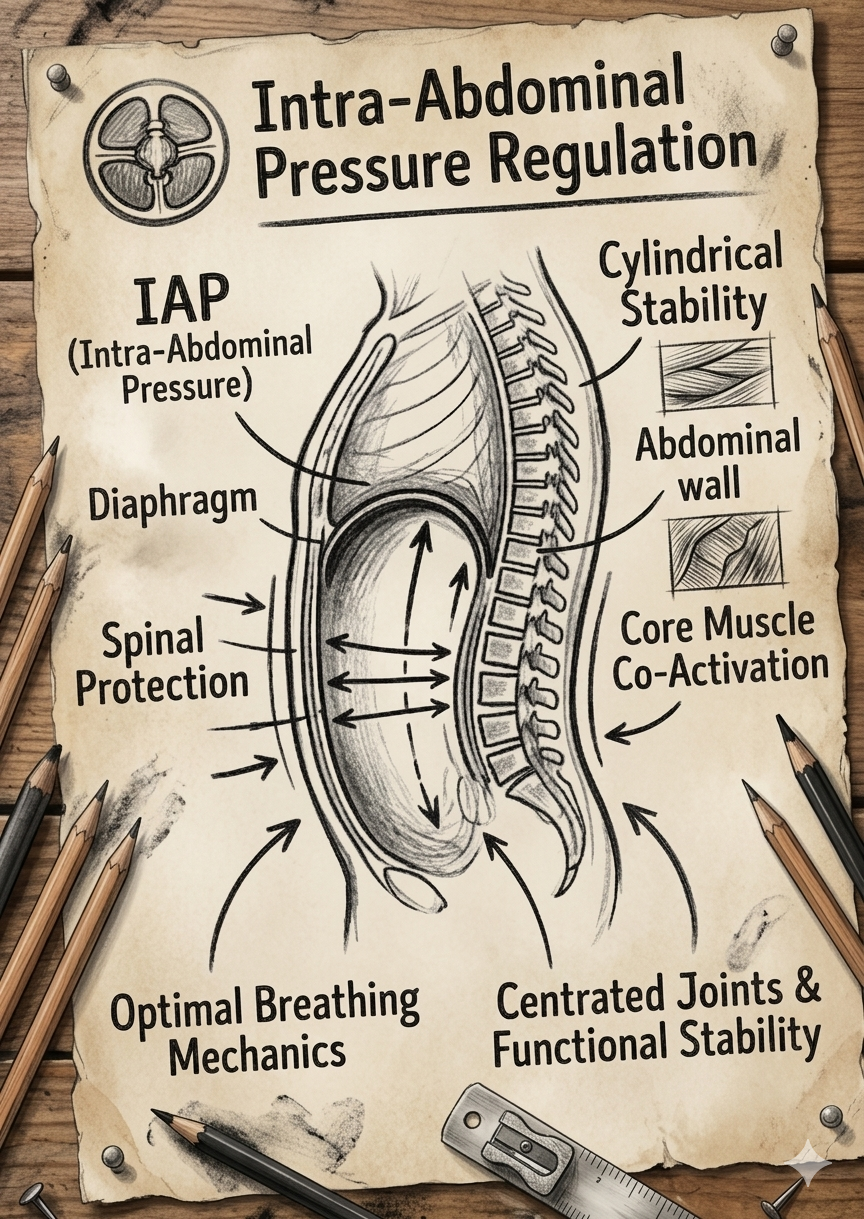
Intra-Abdominal Pressure Regulation
The coordinated activity of the diaphragm, pelvic floor, and abdominal wall creates the pressure that supports the spine during every movement.
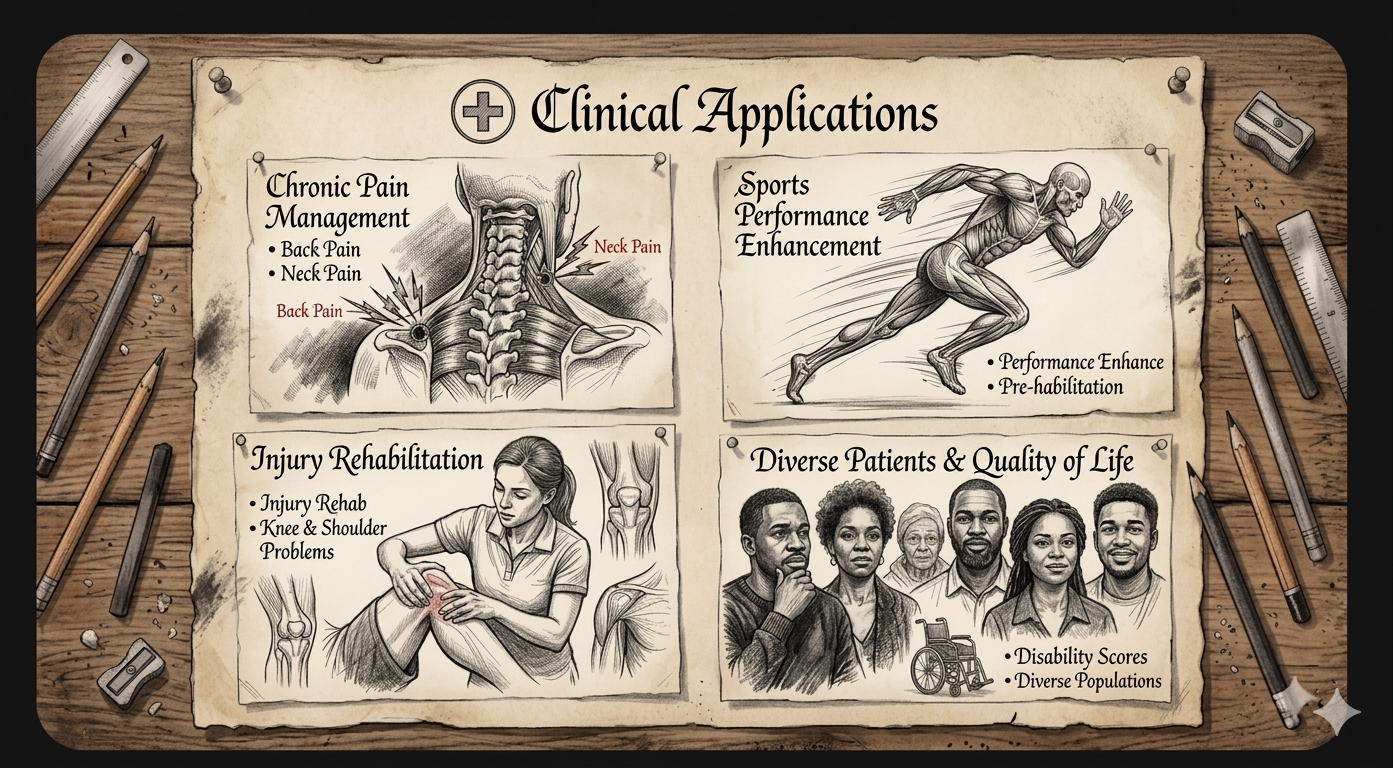
Clinical Applications
From chronic pain rehabilitation to high-level athletic performance, DNS principles apply across the full spectrum of human movement.
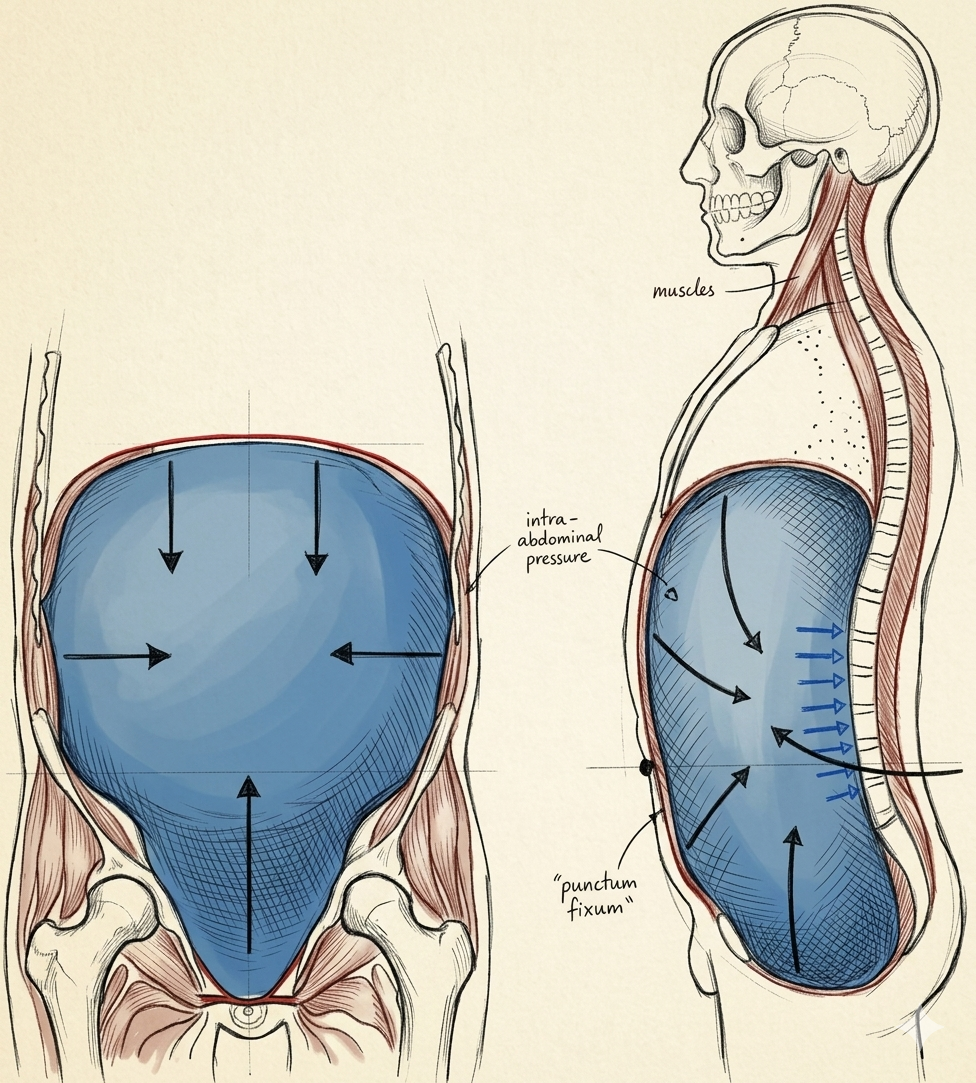
It Often Starts with Breathing
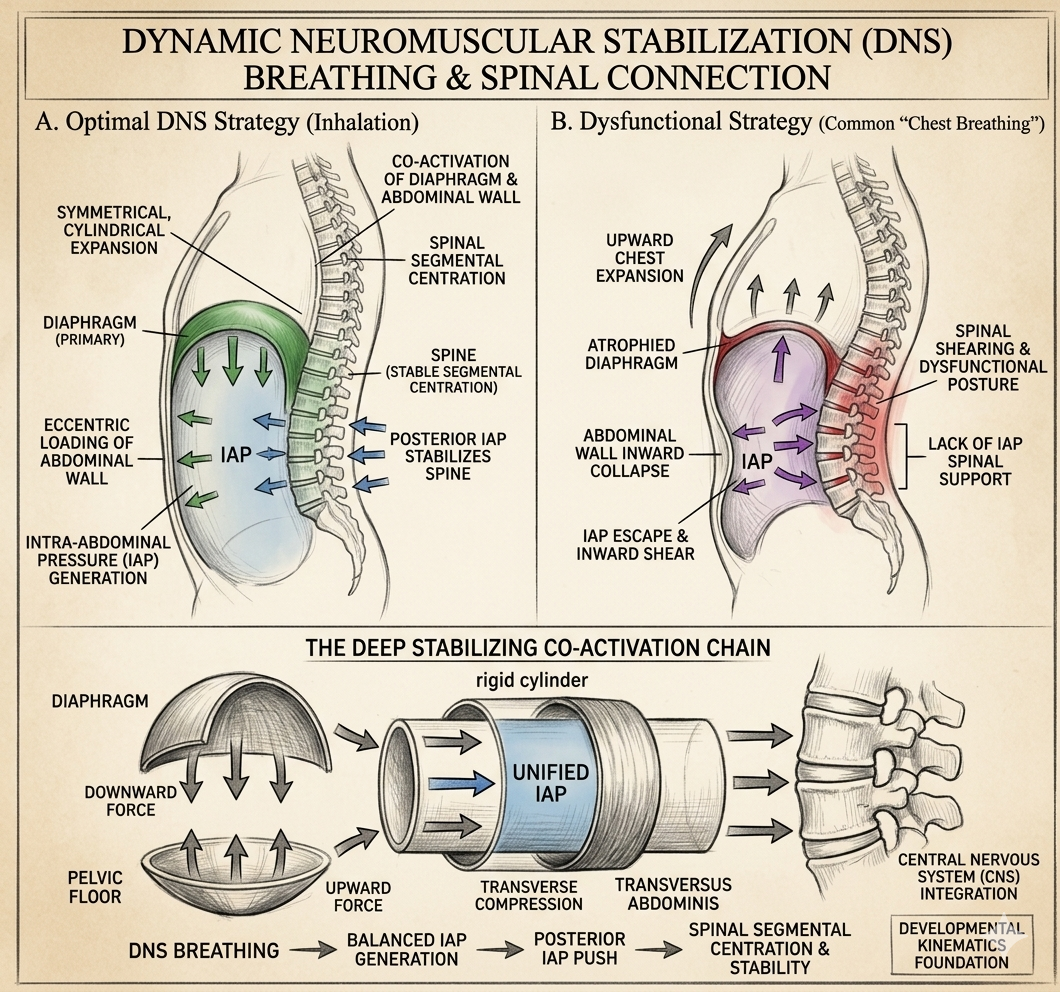
A common cause of poor stability is an incorrect breathing pattern. Therefore, the DNS approach begins with an assessment and correction of breathing. The diaphragm is a respiratory–inhalation muscle, but it also performs a very important stabilization function. There is strong clinical evidence that back pain is more prevalent in those individuals with reduced ability to activate the diaphragm's dual function of postural stability and breathing. The correct use of the diaphragm stimulates the contraction of pelvic floor and abdominal wall muscles — "the cylinder" — which increases Intra-Abdominal Pressure (IAP). The co-contraction of these muscles regulates IAP and is key for core stability.
Then, There's Something Called Joint Centration
The goal with DNS training is to achieve joint centration — where a joint is in its correct biomechanical position during motion and load. A joint that is poorly centrated will have ineffective stabilizing muscles that can lead to instability or stiffness, increasing the risk for injuries. In ideal alignment of a joint there is an efficient movement pattern. This also means that you can load more in your training. Joint centration is crucial, and sometimes the DNS practitioner has to manually place the individual's joints in centration to facilitate proper stabilization.
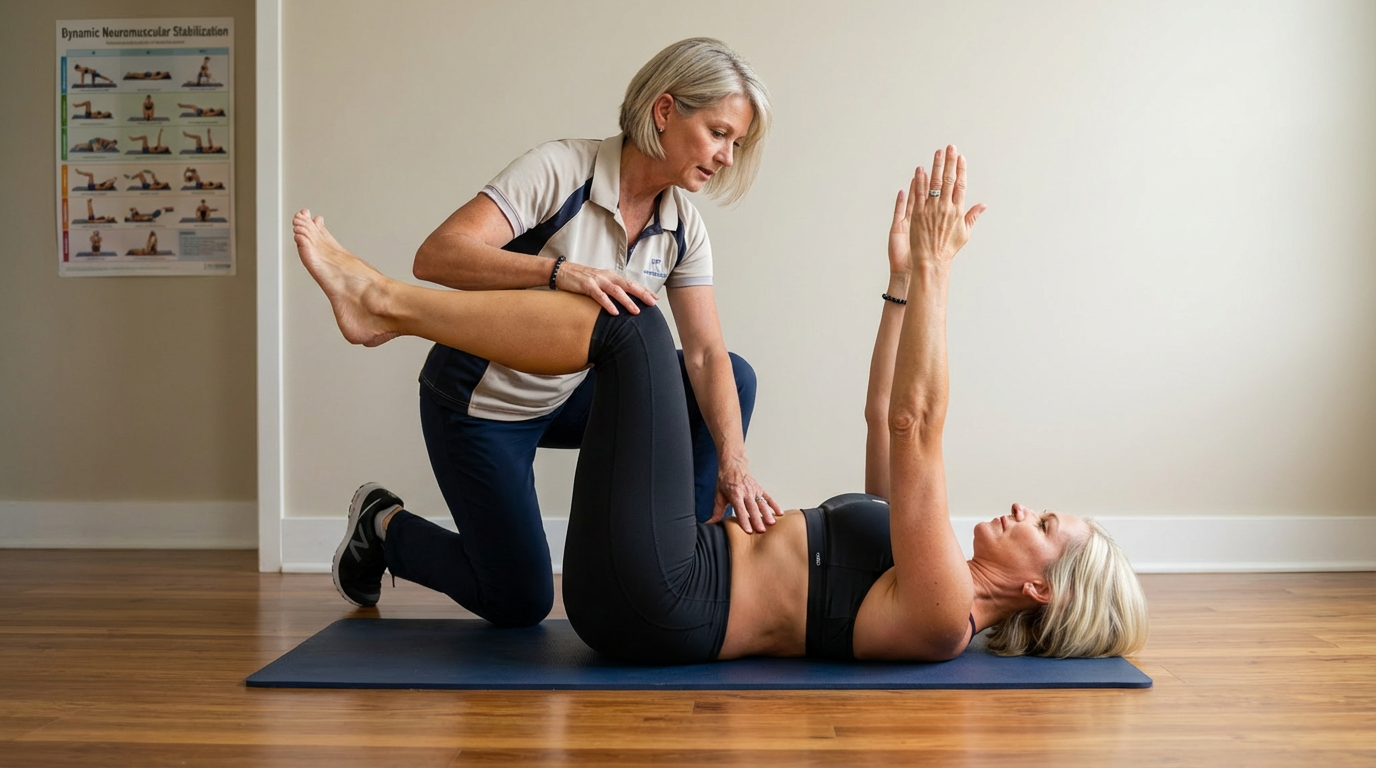
...And Exercises
The focus of DNS exercises is learning good quality core function and joint centration in extremities using proper IAP (remember… breathing). We start with slow and simple motions so that we can later maintain stability in quicker and more complex exercises.
To correct, reinforce, and make permanent, this neuromuscular training requires 10–20 minutes of daily training using specific exercises until proper movement becomes automatic.
Natural Movement Patterns
Functional Strength
For All Ages & Abilities

Core Integration
Restoring Movement Quality
The DNS Difference
Unfortunately, it is much easier to understand the basic concepts of DNS than it is to actually do it. That's where expert coaching makes all the difference.
Traditional Approaches
- Focus on isolated muscles
- Treat painful areas
- Strengthen without changing coordination
DNS Approach
- Restores breathing-core coordination
- Improves joint positioning
- Retrains movement patterns
- Builds stability during real movement
The goal is not simply to reduce pain — but to improve how the body functions.
Who Benefits From DNS?
DNS has applications across a range of situations. Here's how it applies to specific concerns:
Chronic Pain
Your pain keeps coming back despite treatment. DNS looks at how your body stabilizes during movement.
Learn more →Hands-on cues
Cues helps you feel what is right.
Learn more →Sports Performance & Longevity
Is your foundation built to support your goals for the next two decades? You have the strength and drive — ensure your movement patterns can match your ambitions.
Learn more →Breathing
Most people think of the diaphragm as a breathing muscle. It also has a second, less well-known function: it's one of the most important muscles for stabilizing your spine.
Learn more →Posture
You've tried to fix your posture before. It works for a while — then the moment you stop thinking about it, you're back where you started. That's not a willpower problem.
Learn more →Core Stability
You can have very strong core muscles and still have poor core stability. The difference often comes down to timing — about 20 milliseconds of difference in when the deep stabilizers fire.
Learn more →Where DNS Comes From
DNS was developed by Professor Pavel Kolář and his research group at Charles University in Prague, Czech Republic. It has been rapidly gaining attention and acceptance worldwide as an effective functional rehabilitation approach. A number of clinical papers have been published.
Meet Eva Andersson

Eva Andersson is certified by the Prague School of Rehabilitation — the group that developed DNS under Professor Pavel Kolář. She focuses on identifying dysfunctional stabilization patterns and helping patients retrain them through specific manual treatment and exercises.
More about Eva →Book Your DNS Training Session
DNStrainer at Liberation Fitness / Scandinavian Clinic
Suite 202B - 101 West 16th Street
North Vancouver, BC V7M 1T3