DNS and Posture
DNS and Posture: Why "Sit Up Straight" Doesn't Work Long-Term
You've probably tried to fix your posture before. Pulled your shoulders back. Tucked your chin. Maybe bought a standing desk or a posture corrector. It works for a while — then the moment you stop thinking about it, you're back where you started.
That's not a willpower problem. It may be a stabilization problem.
Book a One-on-One DNS Assessment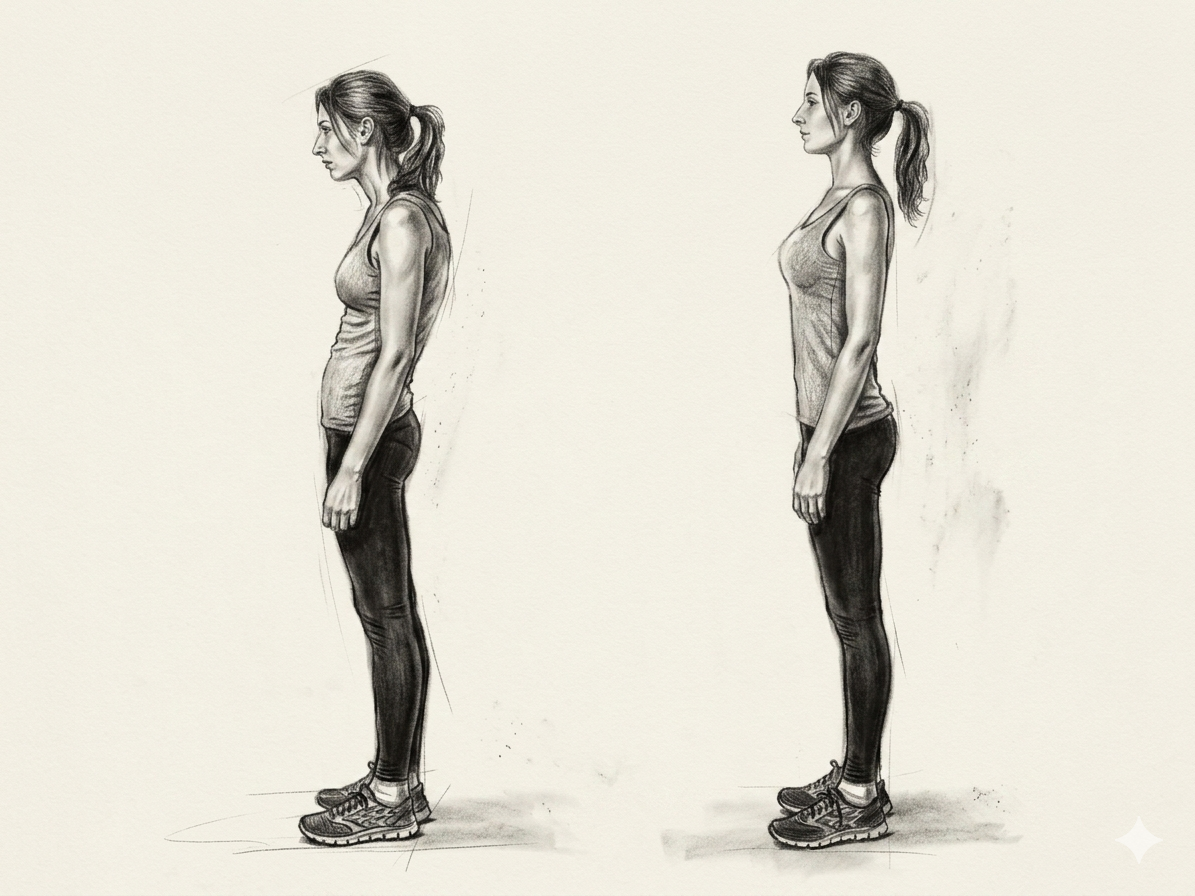
Posture Isn't a Position — It's a System
Here's the thing that changes how you think about this: posture isn't really about holding a shape. It's a reflection of how your nervous system organizes stabilization in the background.
When your deep stabilizing muscles are doing their job well — automatically, without you thinking about it — upright posture happens with relatively little effort. Your skeleton stacks efficiently. Your muscles don't have to overwork to keep you from collapsing forward.
When that system isn't working well, your body still has to stay upright somehow. So it compensates. Superficial muscles take over — the upper trapezius, the back extensors, the neck muscles. They can do the job, but they're not designed for it all day long. That's when you start feeling stiff, tight, and sore.
Why Willpower-Based Corrections Fade
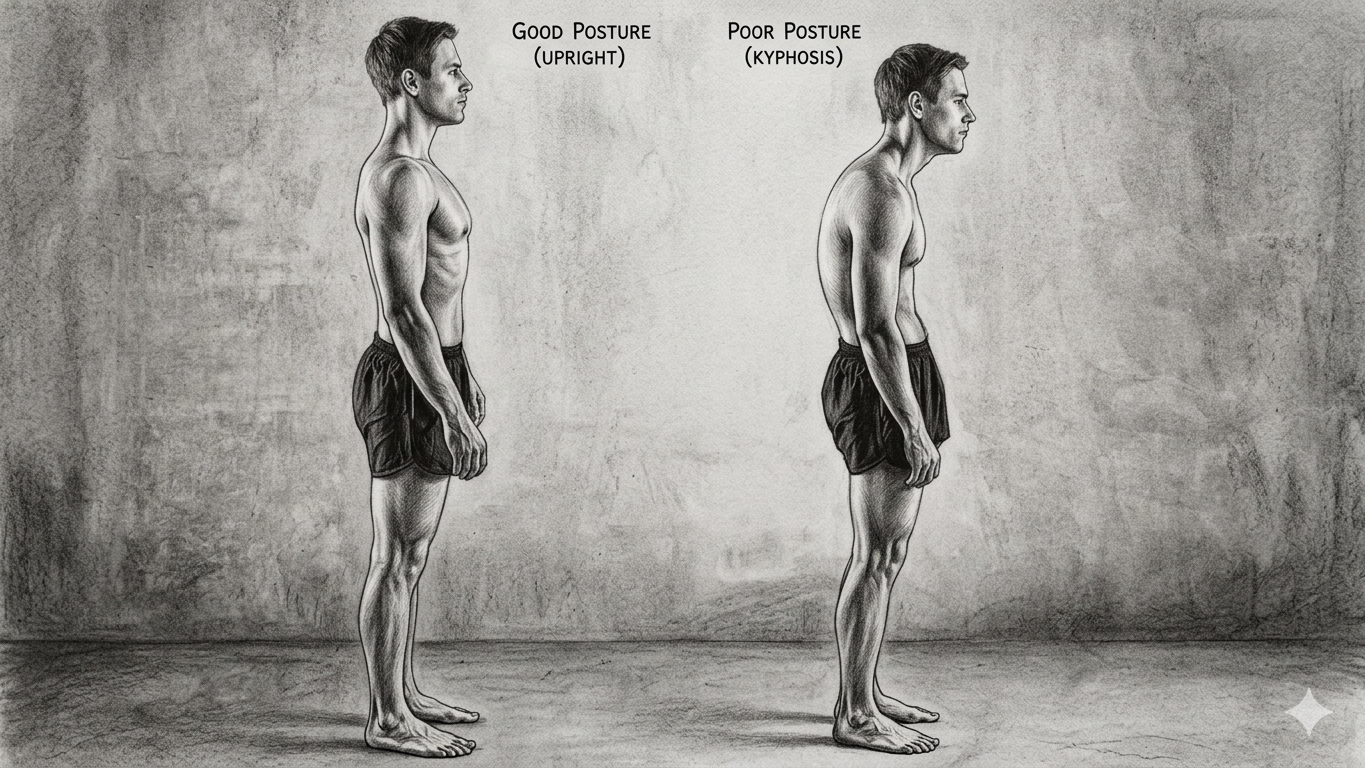
When someone tells you to "sit up straight," what typically happens is you engage the muscles you can consciously control — you pull your shoulders back, tighten your back, lift your chest. This looks like good posture from the outside.
But the deep stabilizing system — the diaphragm, the deep abdominal wall, the pelvic floor — is still not doing its part. You're essentially holding a posture on top of a system that hasn't changed. The moment your attention goes elsewhere, the old pattern reasserts itself.
This is why postural corrections based purely on "hold this position" tend not to last. The underlying motor program — how your brain organizes the task of staying upright — hasn't been addressed.
What DNS Looks At Differently
Dynamic Neuromuscular Stabilization approaches posture as an output of the whole stabilization system, not as an isolated thing to correct. The assessment starts from the inside out:
Is the diaphragm contributing to stability?
If your breathing pattern is chest-dominant, the diaphragm's stabilization role is reduced. Without that internal support, the spine has to rely on the outer muscles to stay upright — and those muscles fatigue.
Are the deep abdominal muscles active?
Not in the "ab exercise" sense — but in the sense of creating even intra-abdominal pressure that supports the spine from the inside. Many people with poor posture have plenty of superficial abdominal strength but very little deep stabilization happening automatically.
What's happening at the ribcage and pelvis?
The position of the ribcage relative to the pelvis determines whether the deep system can work. If the ribcage is flared or tilted, the geometry is wrong for the diaphragm and abdominal wall to function optimally — no amount of cueing "engage your core" will fix that.
The Developmental Angle
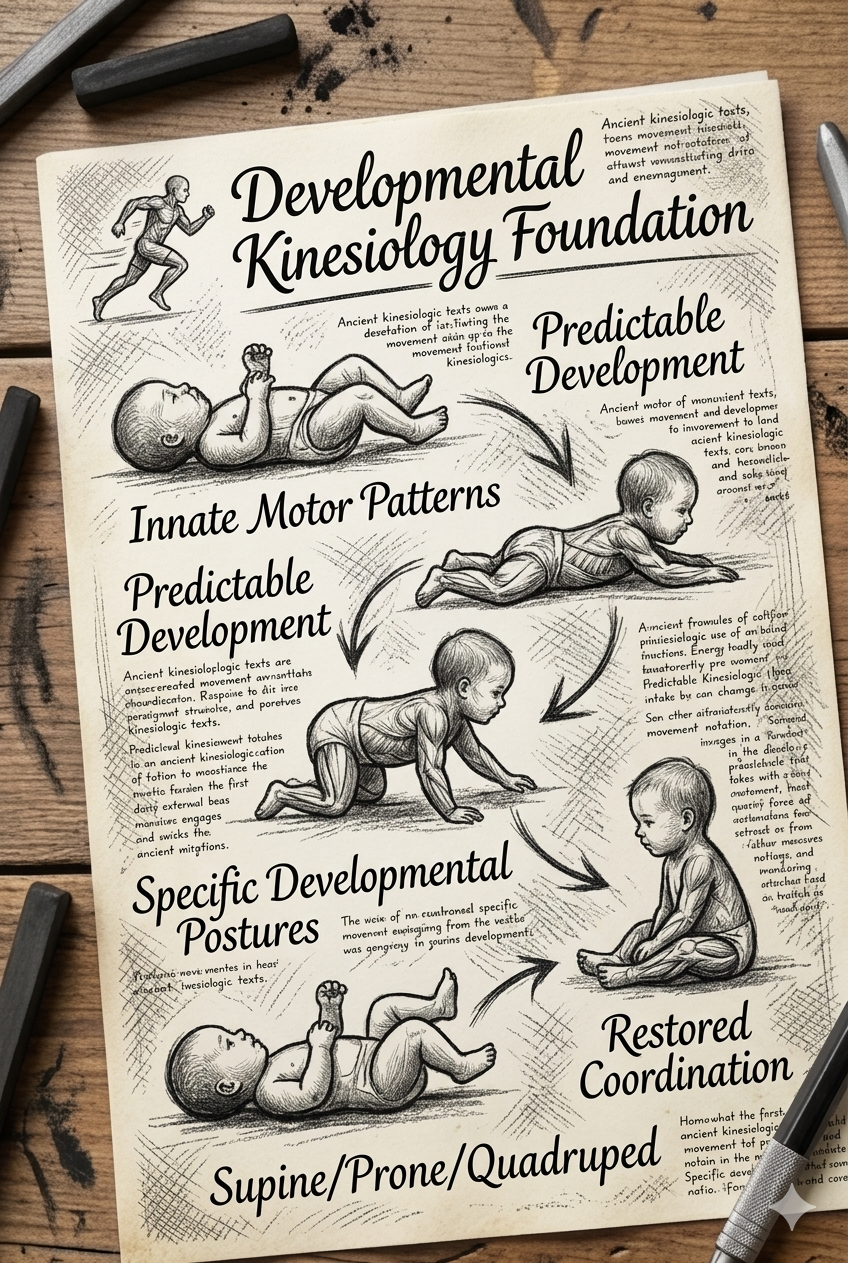
Here's something interesting: as infants, we all developed posture automatically. No one taught a baby to sit upright. The nervous system matured, the stabilizing muscles activated in the right sequence, and sitting happened — with perfect alignment.
DNS uses this principle. The positions we moved through in our first year of life — lying on the back, on the belly, sitting, transitioning to all fours — each required specific stabilization patterns. Those patterns are still in the nervous system. In many adults, they've been overridden by years of compensatory habits, but they can often be re-accessed.
The exercises in DNS look surprisingly simple — often resembling infant positions. But the goal isn't the position itself. It's to re-activate the stabilization pattern that should accompany that position. When those patterns start working again, posture tends to improve as a consequence — not as something you have to consciously maintain.
What This Means Practically
If your posture bothers you — or if you have pain that seems connected to how you sit or stand — it may be worth looking at whether the stabilization system underneath is functioning well.
Some signs that it might not be:
- •You can correct your posture temporarily, but it doesn't hold
- •You feel like you're fighting gravity all day
- •Your neck, upper back, or shoulders are chronically tight despite stretching
- •You feel better when you're moving, worse when you're still
These aren't diagnostic — many things can cause these patterns. But they're the kind of presentation where looking at the stabilization system sometimes turns up something useful.
How a Session Works
In a one-on-one session, Eva assesses how your deep system is functioning — whether the diaphragm is stabilizing (see DNS breathing training), whether intra-abdominal pressure is being generated evenly, how your ribcage and pelvis relate to each other.
From there, the work is about re-establishing correct patterns through specific positions and cues. Some people feel the difference in one session. For others, it takes a few sessions plus daily practice (usually 10–15 minutes) before the new pattern starts to become the default.
The goal isn't to give you something to think about all day. It's the opposite — to retrain the system so that good posture happens without effort, the way it did when you were one year old.
Curious?
If you'd like to find out whether your stabilization patterns are playing a role in your posture (or in pain that seems related to it), a single session can often clarify that.
Book a One-on-One DNS AssessmentOr email us at info@dnstrainer.com