DNS for Athletes
Athletic Performance & Longevity
For the trail runners, mountain bikers, skiers, and climbers on the North Shore — fitness is rarely the problem. You have the strength and the drive.
Is your foundation built to support your goals for the next two decades? Ensure your movement patterns can match your ambitions.
Book a One-on-One Movement Session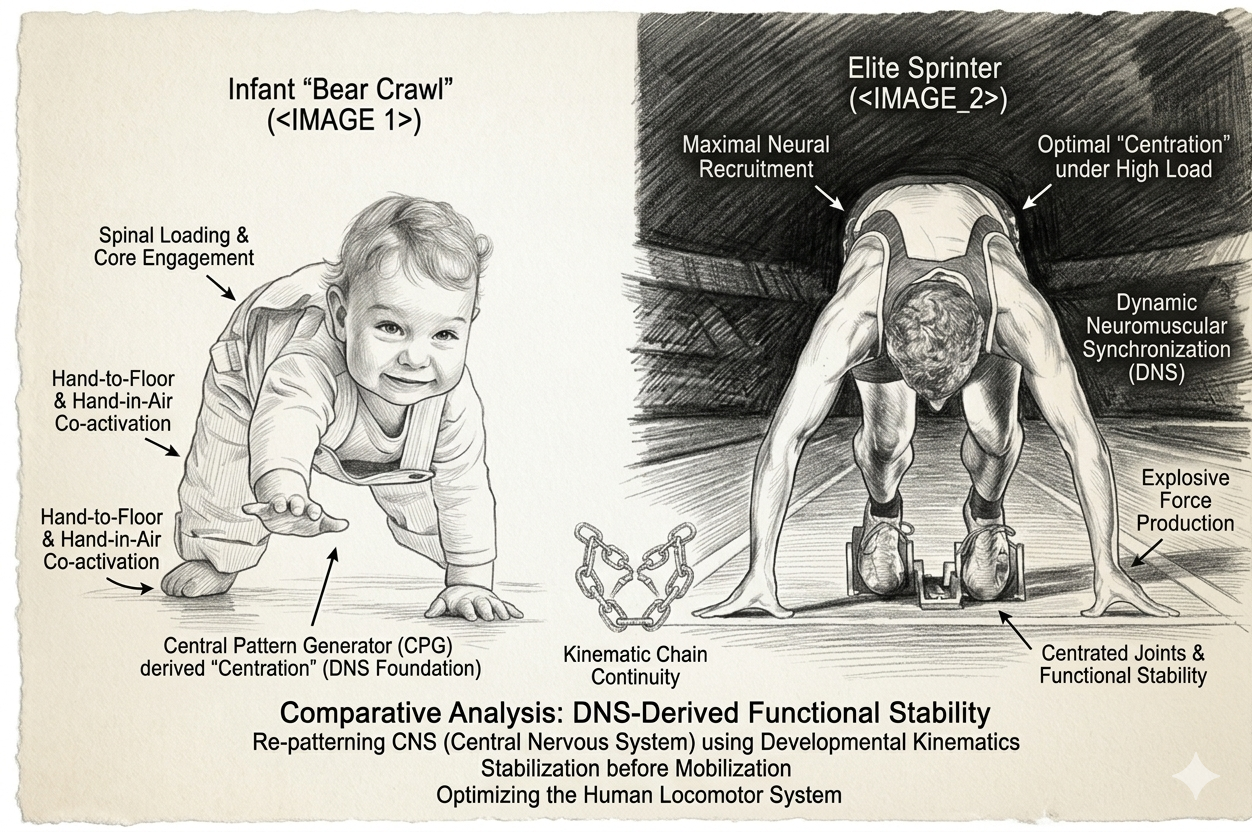
The Functional Gap
Every athlete has what DNS founder Professor Pavel Kolář calls a functional gap. This is the precise moment when the demands of your activity exceed your deep stabilizing system's capacity to maintain control.
Once you enter this gap, your brain defaults to "primitive" compensatory strategies. You can still perform. But instead of load being managed by the appropriate muscular chains, it is shunted into your discs, joint capsules, and tendons.
While performance may be preserved in the short term, you are essentially "borrowing" from your joint health to pay for your performance — a primary driver of chronic overuse injuries.
Stop the Leaks: Efficiency in Movement
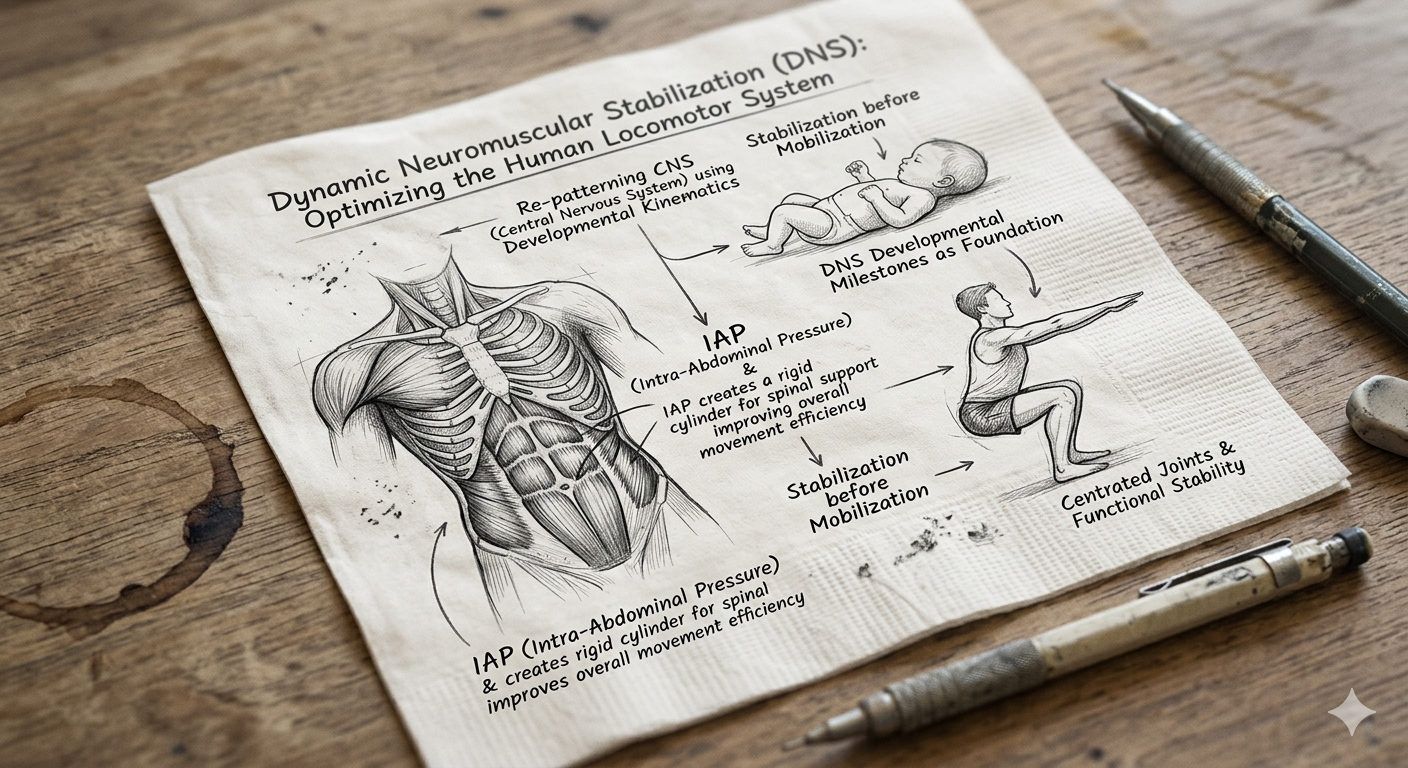
In the DNS framework, we look for what we call "force leakage." This is when the energy you generate to move — whether you're pedaling, climbing, or running — dissipates through your joints instead of being directed into your performance. Your lower back, knees, and hips end up absorbing "leaked" force they weren't designed to carry.
To fix this, we train the punctum fixum — a Latin term for a "fixed point." Think of it as a solid anchor. Before your arms or legs move, your core must automatically stiffen to create a stable platform. When that platform is rock-solid, power transfers cleanly. When it's soft, your effort simply leaks away into your joints.
Accessing Your Original Blueprint
DNS is based on developmental kinesiology — the study of how we moved in our first year of life. As infants, we didn't go to the gym; our nervous system naturally "unlocked" stabilization patterns as we learned to roll, crawl, and sit.
Over time — due to injuries, desk jobs, or specialized sports — we often lose access to these "factory settings." Our brain starts using compensatory shortcuts. DNS uses those same developmental positions from your first year of life to "re-boot" your system. We aren't just building muscle; we are re-establishing the connection of muscle patterns that should be running in the background automatically. Learn More

Used in Elite Sport
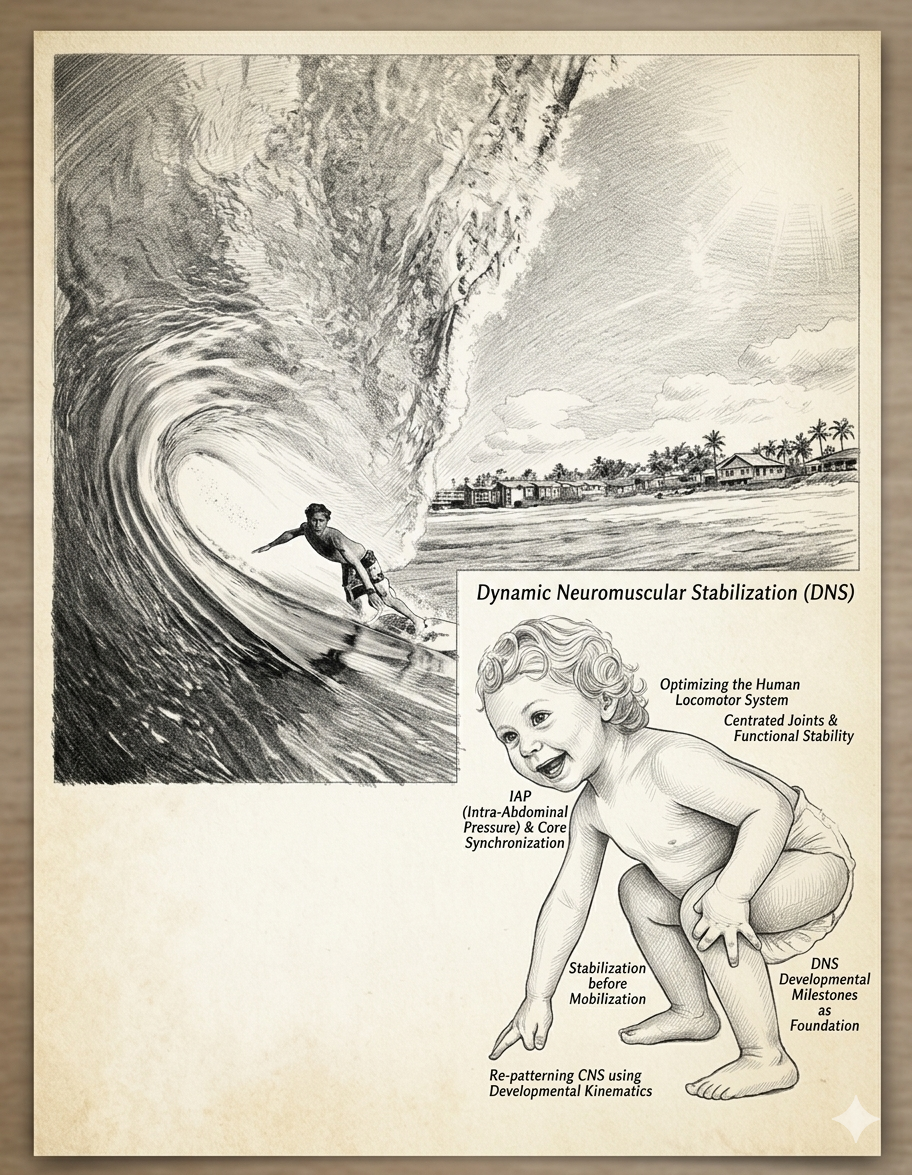
DNS has been used by a number of high-level athletes to maintain performance and extend careers.
- •Olympic gold medallist Ester Ledecká used DNS to address a lumbar disc issue at age 18.
- •Hockey player Jaromír Jágr maintained elite performance into his late 40s with a focus on movement quality.
- •World-record javelin thrower Jan Železný sustained his career into his late 30s through attention to stabilization mechanics.
These are exceptional cases, but the underlying principle is the same: the quality of your stabilization foundation matters for how long you can keep doing what you do.
What Happens in a Session
DNStrainer offers private, one-on-one sessions. DNS is directly dependent on the quality of your movement.
DNS exercises look simple, but the difference between doing the movement with the right quality is subtle. Without someone watching and correcting in real time, it's easy to perform the exercise while your nervous system still uses the old compensatory pattern. A practitioner can detect that and help you find the correct activation.
In a session, Eva looks at:
Movement Patterns
Breathing & Stabilization
Real-Time Correction
Looking Ahead
If you're training hard and thinking about longevity — whether that's staying on the trails at 60 or avoiding the injuries that accumulate over decades — it may be worth looking at what's happening underneath the fitness.
Book a One-on-One Movement SessionOr email us at info@dnstrainer.com
Book Your DNS Training Session
Take the first step towards better movement, improved posture, and enhanced performance. Experience personalized coaching tailored to your unique needs.
Schedule Your Session NowOr email us at info@dnstrainer.com