DNS Movement Assessment
When Pain Keeps Coming Back
You have probably tried a number of things already. Maybe you've had some relief — but then, weeks or months later, the same pattern in your lower back, neck, shoulder, or hip shows up again.
That's frustrating. And it doesn't mean something is fundamentally wrong with you. It may mean that imbalances in your muscle patterns haven't been addressed yet.
Book a One-on-One DNS Assessment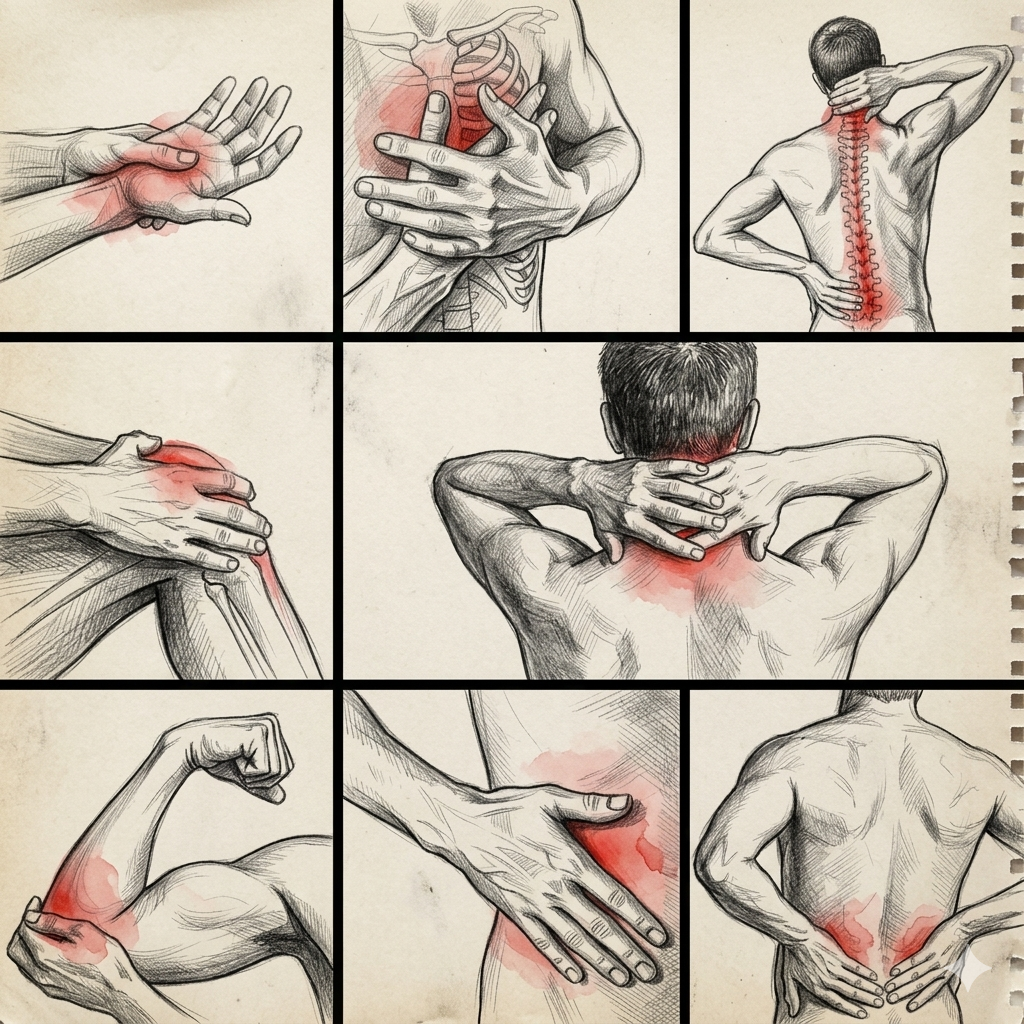
What DNS Looks At
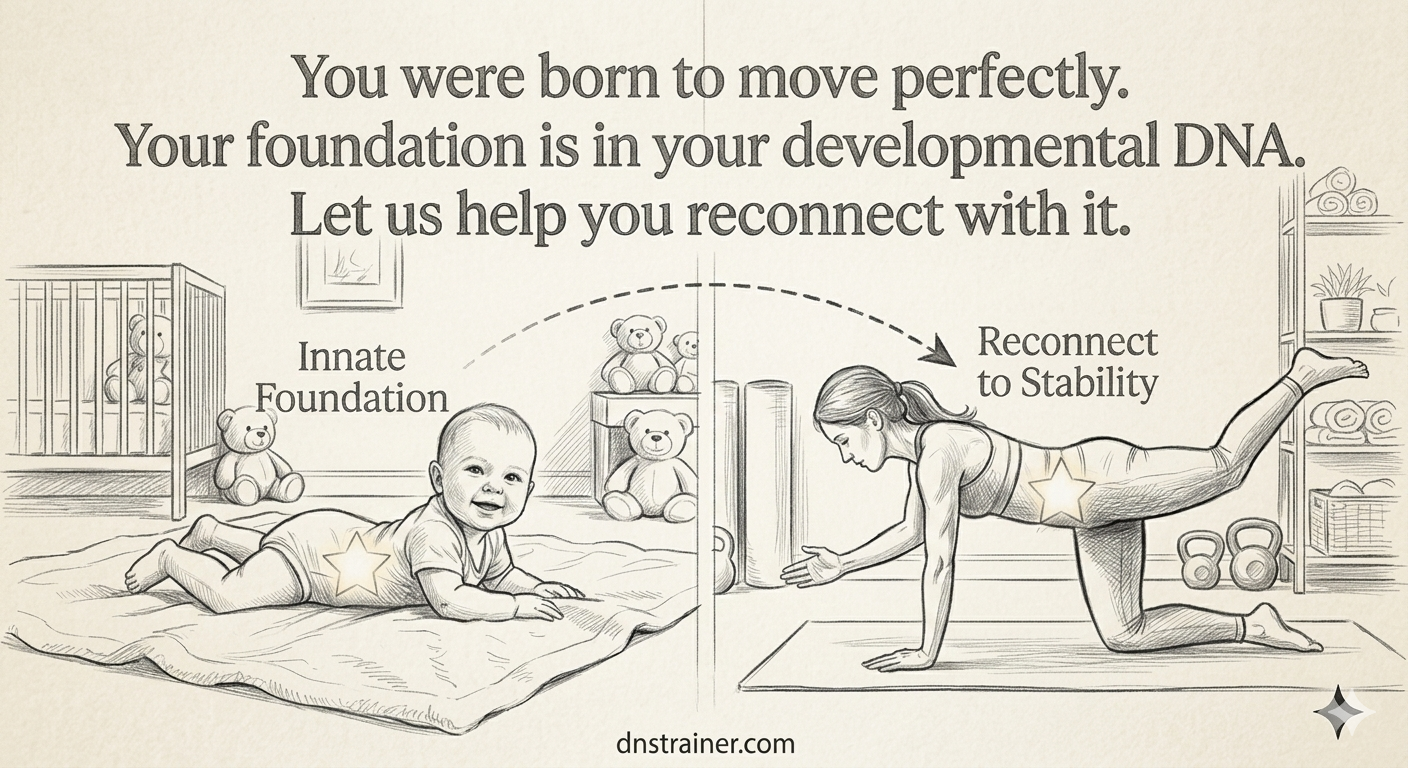
Dynamic Neuromuscular Stabilization (DNS) is based on a fairly simple idea: the way your brain organizes movement matters.
When we're infants, our nervous system develops stabilization patterns automatically — we all reach milestones like sitting and crawling in roughly the same way, with efficient muscle coordination. For various reasons — injuries, poor postures, stress, habits — those patterns can get disrupted over time. When they do, the body compensates. And those compensations can lead to areas being repeatedly overloaded.
DNS uses an individualized assessment to look at your biomechanical function. Learn more
Why Does the Pain Come Back?
Two people with identical-looking lower back pain might have completely different reasons for it.
Person 1
Poor posture.
Person 2
Poor core.
Person 3
Poor ergonomics.
Without looking at how your nervous system organizes movement as a whole, you may only achieve temporary relief.
What Happens in a Session
DNStrainer offers private, one-on-one sessions. DNS is directly dependent on the quality of your movement.
DNS exercises look simple, but the difference between doing the movement with the right quality is subtle. Without someone watching and correcting in real time, it's easy to perform the exercise while your nervous system still uses the old compensatory pattern. A practitioner can detect that and help you find the correct activation.
In a session, Eva looks at:
Movement Patterns
Breathing & Stabilization
Real-Time Correction
It Often Starts with Breathing
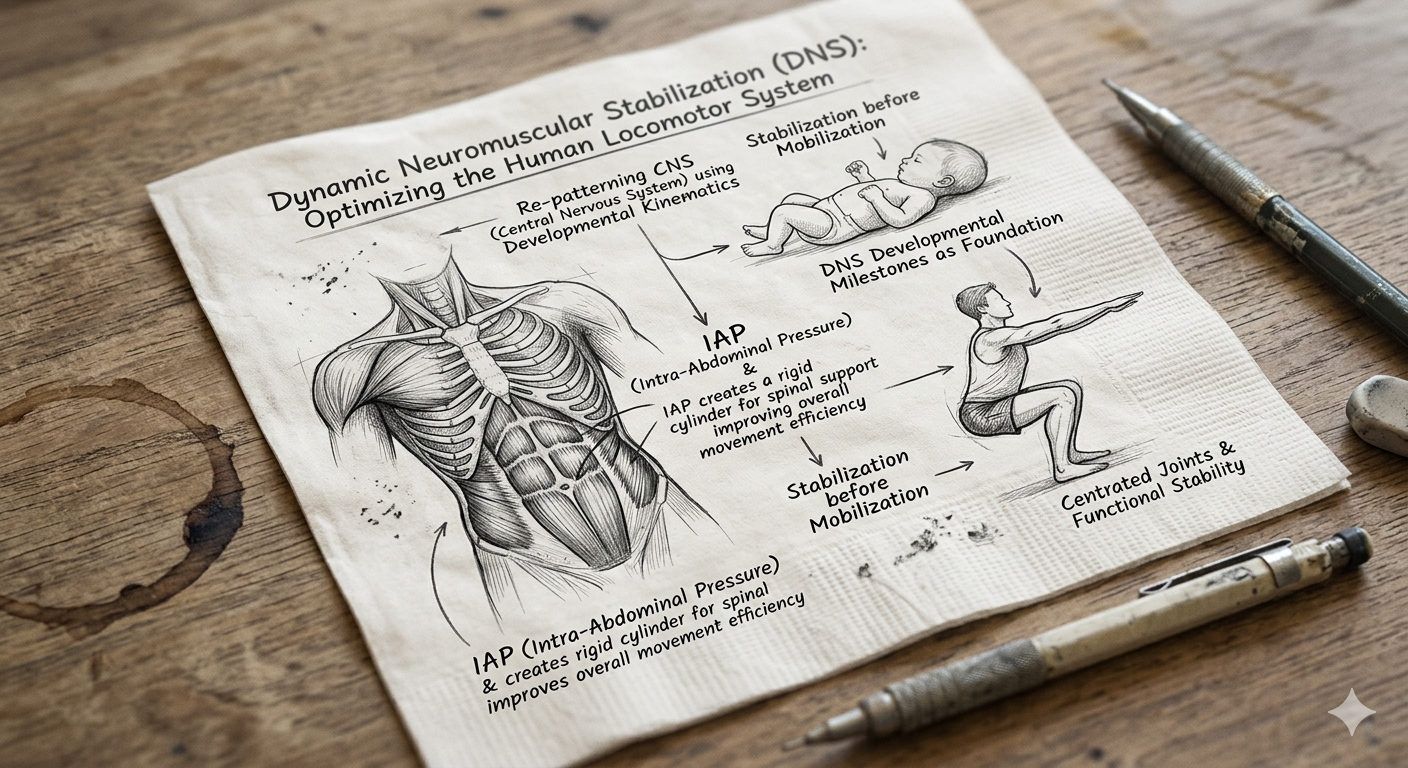
A common factor in poor stability is an incorrect breathing pattern. The diaphragm isn't just for breathing — it also plays an important role in the muscular skeletal system.
When it contracts properly, it activates the pelvic floor and abdominal wall muscles to co-contract, creating intra-abdominal pressure that supports the spine.
About Eva
Eva Andersson is certified by the Prague School of Rehabilitation — the group that developed DNS under Professor Pavel Kolář. She focuses on identifying dysfunctional stabilization patterns and helping patients retrain them through specific manual treatment and exercises.
The exercises themselves are initially slow and simple — the goal is to establish correct stabilization before adding complexity. Typically, 10–20 minutes of daily practice is needed until the patterns become automatic.
Ready to Look at This Differently?
Book a One-on-One DNS AssessmentOr email us at info@dnstrainer.com